AI's Circular Financing, Explained — Scam or Not?
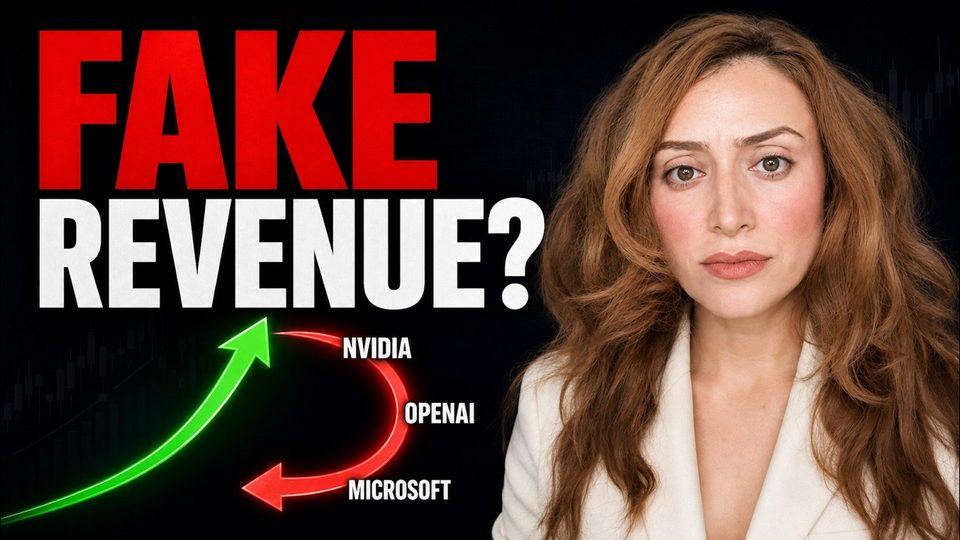
AI IN FINANCE
Is AI's Circular Financing Between Nvidia, Microsoft and OpenAI a Scam?
In short: Microsoft's AI annualized revenue run rate hit $37 billion in April 2025, up 123% year on year, from roughly $16.5 billion a year earlier.
Key takeaways
- Microsoft's AI annualized revenue run rate hit $37 billion in April 2025, up 123% year on year, from roughly $16.5 billion a year earlier.
- Reconstructed figures suggest around 70% of Microsoft's AI revenue comes from OpenAI alone, which reportedly spent about $2.9 billion in a single quarter running its models on Microsoft's servers — while Microsoft has invested more than $13 billion in OpenAI.
- The legal, decades-old mechanism at work is called vendor financing, not the illegal "round-tripping" that sent Enron executives to prison.
In a new explainer for her AI for Finance channel, Ani Björkström, a Stockholm-based tech consultant working in financial services, breaks down the chart that has been circulating online: arrows looping between Nvidia, Microsoft and OpenAI, read by most viewers as proof that the AI boom is propped up on fake, self-dealing money. The video does not defend or debunk that reading outright. Instead, it walks through what the underlying deals actually are, names the accounting mechanism involved, and lays out the real numbers behind Microsoft and OpenAI's relationship — concluding that the arrangement is legal, decades-old, and genuinely risky at the same time.
Is this "circular financing" actually round-tripping?
Björkström's first point is definitional: "circular financing" is not an accounting term. It is a label journalists reached for to describe the shape of a chart. The Financial Times' Lex column, she notes, calls these arrangements "back-to-back" deals rather than circular ones, because real goods move in both directions — chips ship, servers run workloads, and Nvidia books real revenue while still holding the equity stake it paid for.
There is a genuinely illegal version of this pattern, and it has a name: round-tripping. That is when two companies push money back and forth purely on paper to inflate reported revenue, with no real goods changing hands — the practice Enron used, which resulted in criminal convictions. What Nvidia, Microsoft, Amazon, Google and the AI labs are doing has a different name: vendor financing, an arrangement in which a seller helps fund its own customer's purchase, through a loan, installments, or an equity stake, and in return keeps a claim on that customer's future success.
Why would sound companies structure deals this way?
The video uses two escalating analogies. First, a car loan: the seller effectively hands over both the product and the financing to buy it, and the arrangement is not fraudulent because real value moves both ways — though real risk exists if the buyer stops paying. Second, a pharmaceutical company taking an equity stake in a small research lab: the lab gets funding it could never have borrowed conventionally, and the pharma company secures a future manufacturing customer plus a share of the upside if a drug succeeds. Their fates become tied together.
Swap in the real names and the AI story follows the same shape: hyperscalers (Microsoft, Google, Amazon) play the role of big pharma, AI labs (OpenAI, Anthropic) play the small lab, and Nvidia supplies the compute, cloud services and chips. Björkström's summary line: the hyperscalers are investing in the exact companies that generate most of their AI revenue.
What do the actual numbers show, and is this the dot-com bubble again?
Using Microsoft and OpenAI as the clearest example, the video cites Microsoft's disclosed AI annualized revenue run rate of $37 billion in April 2025, up 123% year on year from around $16.5 billion (roughly $4 billion a quarter) the year before. Citing documents reported by journalist Ed Zitron, it notes OpenAI spent about $2.9 billion in a quarter running its models on Microsoft's servers — implying an estimated 70% of Microsoft's AI revenue traces back to OpenAI alone, a company Microsoft has invested more than $13 billion in. Because OpenAI is private, Björkström flags these as reconstructions from leaks and reporting, not audited figures, and stresses they should be read as order-of-magnitude estimates. The same pattern repeats elsewhere: Amazon and Google have both invested billions in Anthropic, which has agreed to use Amazon's cloud for training and Google's chips to run on.
If AI pays off, Microsoft is paid twice on every ChatGPT query — a share of OpenAI's profit as an equity holder, plus a hosting fee. If confidence collapses, every vendor in the web loses twice at once: the investment is written off, and the customer paying the hosting bills disappears. The video draws one key distinction from the dot-com era: that bubble was inflated by debt, which spread losses into banks, pensions and insurers, whereas this round is largely funded from big tech's own cash. The caveat to that caveat is that the data-center buildout surrounding these deals is debt-funded, which the video flags as a separate, real risk. It also notes two reasons this isn't purely a big-tech problem: these firms now account for a large share of US GDP growth, and until OpenAI goes public, nobody outside the company can verify the books — a state Björkström calls concentration of risk.
| Pairing | Investment flow | Return flow |
|---|---|---|
| Microsoft → OpenAI | $13bn+ invested (equity) | OpenAI spends ~$2.9bn/quarter on Microsoft servers |
| Amazon & Google → Anthropic | Billions invested | Anthropic trains on Amazon's cloud, runs on Google's chips |
| Nvidia → AI companies | Equity stakes across the AI economy | Those companies buy Nvidia chips |
| Enron (illegal comparison) | Fake paper transactions, round-tripping | No real goods moved; ended in criminal conviction |
FAQ
Is circular financing the same as round-tripping?
No. Round-tripping is illegal — money moves back and forth on paper with no real goods exchanged, as Enron did. The Nvidia-Microsoft-OpenAI arrangements involve real chips, real servers and real booked revenue, which the video identifies as vendor financing instead.
What is vendor financing?
Any arrangement where a seller helps pay for its own customer's purchase — via a loan, installments, or an equity stake — so the buyer gets the product without upfront cash, and the seller books the sale while keeping a claim on the buyer's future success. It is decades old and legal.
How is this different from the dot-com bubble?
Dot-com era vendor financing was largely debt-funded, which spread losses into banks, pensions and insurers. Today's AI deals are mostly funded from big tech's own cash — though the video notes the surrounding data-center buildout is debt-funded, calling that a separate risk.
Full transcript of the video (1,498 words, 13 sections)
Chapters: 0:00 The chart everyone has seen · 0:41 The picture you think you're looking · 1:10 Three questions this video answers · 2:14 The version that IS illegal · 2:49 The real name for it · 4:36 Same deal, bigger numbers · 5:06 The numbers nobody says out loud · 6:51 Paid twice — or burned twice · 9:07 The one thing to remember
0:00 Circular financing. You have seen the chart, the one with the arrows looping between Nvidia, Microsoft and Openie, and you have probably had the same fold everyone else has. That is the same money going around in a circle. That is a scam. Here is the thing. For all the times that phrase get used, almost nobody explains what is actually happening inside those arrows. Why do these companies do it? And if it is so obviously wrong, how are they getting away with it? Stick with me for 8 minutes and you will understand the most talked about, least understood money story. Nvidia invests in IE companies. Those companies buy Nvidia chips.
0:46 Microsoft invest in Open I. Open I spends that money on Microsoft servers. Drone as a diagram, it looks like a closed loop. the same dollars going round and round while every valuation in the picture goes vertical. That is the intuition. Now let's find out whether the intuition survives contact with the actual accounting. I am going to answer three questions in this order. One, what is actually happening and what the real name for it is because circular financing isn't it? Two, why any sound company would do this? That is two quick analogies and you will have it free. You should actually be worried and this is the part where most coverage gets it wrong in both directions.
1:36 First problem circular financing isn't an accounting term. It is a label journalist reached for to describe a shape on a chart. Go back a few years before I and basically nobody use the phrase at all. And the financial times lex column makes a sharp point about it. Their world for these deals is backto back not circular because look at what actually moves. Real chips get shipped real servers run real workloads. Nvidia books real revenue and it still holds the equity stake it paid for. Nothing here is given away free. Now there is a version of this that is a genuine scam and it has a name round tripping.
2:22 Round tripping is when two companies push money back and forth on paper purely to inflate their reported revenue. No real goods move. It is fake sales dressed up as a business. Enron did exactly that in 19 and it end up in criminal conviction. It is illegal and what happening here has a different name and once you know it the whole story gets much simpler. Vendor financing. Vendor financing is any arrangement where a seller helps pay for its own customer's purchase. The seller puts money in as a loan, as installment, or as an equity stake. The buyer gets the product now without having the cash to pay for it upfront.
3:08 And then the seller books the sale and keeps a claim on the buyer's future success. That's it. It's decades old. It's completely legal and you have almost certainly been on the receiving end of it. Say I sell you a car and you pay me back in monthly installments. Technically, I have given you two things, the car and the loan to buy the car with. Is that a scam? No. You have a car. Did value actually move? Yes, in both directions. Is there a risk? Absolutely. Mine if you stop paying. That's a vendor financing in its simplest form. And nobody write panic articles about this. Now scale it up. Instead of company and the person, take two companies, a big pharmaceutical firm and a small research lab.
3:57 Big pharma takes an equity stake in the lab. They have got skin in the game. Now they share in the lab's profit and in any rise in its valuation. In exchange, the lab promised that when it develops a new drug, big pharma manufactures it. The lab wins. It gets money to build something it could never have afforded a loan. Pharma wins twice. A guaranteed future customer and the share of the upside if the love hits. But notice what just happened. Their fates are now tied together. Hold on to that because it is the whole story. It is the upside and it is the risk in one move. Swap in the real names and you got the AI story.
4:42 Big pharma becomes the hyperscalers Microsoft, Google, Amazon. The small lab becomes the AI labs. Open AI, Antropic and Factory Access becomes compute, cloud services and chiefs. The hyperscalers are investing in the exact companies that generate most of their AI revenue. That is the sentence to hold in your head for rest of this video. Here is the scale using the clearest example we have. In April 2025, Microsoft said its actual AI annual revenue round rate, basically its monthly AI income annualized, had hit $ 37 billion, up 123% year on year. Walk backwards from that and the year before was around 16.5 billion or roughly 4 billion a quarter.
5:36 Then from documents seen by the journalist Ed Citron, we know that Open spend about $2.9 billion running its models on Microsoft servers in a quarter. Put those side by side and you got an estimate that is generally startling. Something like 70% of Microsoft's AI revenue come from OpenAI alone. And in the other direction, Microsoft has put more than $13 billion in Open AI. So Microsoft is bank rolling its own biggest AI customers. One quick but important caveat. Open AAI is private. So these are reconstructions from leaks and reporting not audited accounts. Treat them as the right order of magnitude not cost.
6:22 And this isn't a Microsoft quirk. The model has been copied straight down the line. Amazon and Google have both put billions into Antropic, a company that been agreed to use Amazon's cloud for training and Google ships to run on. And then there is Nvidia with investment filtering through basically the entire AI economy into companies that run around and buy it ships. It sits right at the center of this web. So why does this makes people nervous? because of that linkage I told you to hold on to. If AI pays off, it is beautiful for Microsoft every time you use Chat GPT, they get paid twice, a cut of OpenAI's profit because they own part of it and the hosting fee because your request is running on their servers.
7:13 But run it the other way. If confidence goes and the bubble pops, every vendor in this web loses twice in the same moment. the investment gets written off and the cloud customers that was paying the bills disappears and this isn't hypothetical. Open AI and Antropic don't make a profit today. The leaked financials we have show enormous losses. Now here is the caveat most coverage skips and it is the bit that makes this video worth 8 minutes of your time. This gets compared to com bubble constantly. But there is a crucial difference. In the dotcom era, vendor financing was founded by debt. That is how the damage escapes one industry and gets into the wider financial systems into banks into pension funds into insurers.
8:01 These ideas are largely founded from big tech own. And if companies want to gamble their own money and lose, honestly, so be it. That's a very different situation from gambling with your pension. But caveat to the cave the data centers build out happening around this deal absolutely is depth found it that's a separate story and a real one two things stop this being purely big tax problem first these companies now account for an enormous share of US GDPR growth when a handful of firms are driving that much of an economy their exposure stops being a private matter Second, until open AI goes public, nobody outside can properly check the books.
8:49 We know broadly that risk has been building. We can't measure it. We are guessing. The technical term for the shape of this is concentration of risk. It amplifies the reward for big tech. If AI really does change the world and it amplifies the pain if it doesn't. If one thing sticks from this video, make it this. Vendor financing is not round tripping. This isn't a dodgy accounting trick that only exists on paper. Real chips ship. Real servers run. Real revenue is booked. But that cuts both ways. Because the investments are real, the losses will also be real. And the books stay private. So the true size of that risk is still estimate.
9:34 So it isn't a scam. It is a bet. And big tech has made the scam bet in several directions at once. So, was it as bad as it sounds? Tell me where you land in the comments. Sensible business or the setup for a very expensive lesson. I read all the comments. And if you want the other half of this story, the depth founded half, subscribe. That one is next.
Want this working inside your finance team?

Ani Björkström — founder of QvantX Sweden AB, a Stockholm consultancy building AI solutions for banks, asset managers and finance teams. Anthropic partner. Every article starts from a real client build, minus the confidential parts. LinkedIn →
Keep reading — AI in Finance
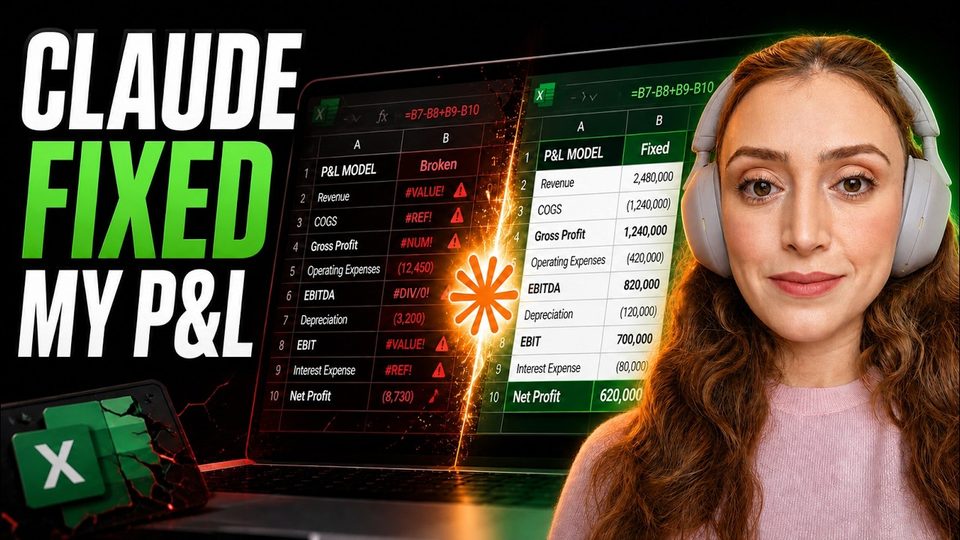 I Tested Claude for Excel: It Fixed My Broken P&L Model
 3 Claude Agents Every Finance Analyst Should Steal (Full Prompts Included)
 3 Ways to Use AI for Finance & Asset Management
More: all 54 articles · Claude vs ChatGPT for finance · best AI tools for finance teams · work with QvantX